





Apr-2026
Through the Lens of Benjamin Howe Conant (1843–1921)
If you’ve ever wished you could step back into Wenham as it looked more than a century ago—to see the streets, houses and faces that shaped everyday life—you can, thanks to the work of Benjamin Howe Conant (1843–1921). Over nearly 30 years, from about 1890 to 1918, Conant created an extensive visual record of the town, leaving behind 3,636 glass plate negatives and several hundred photographic prints.
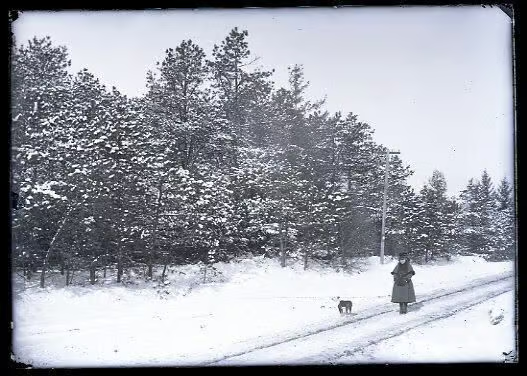
Winter landscape with a girl and dog at the top of Pond Hill near Wenham Lake, walking along train tracks. Jan 21, 1892. From the Benjamin H. Conant Glass-Plate Negative Collection.
Conant’s photographs capture a time of major change in Wenham and the surrounding area. He photographed people, homes, businesses, farms, animals, civic life, Sunday outings as well as everyday moments that don’t often show up in written records. While most of his work focuses on Wenham, some images also include Hamilton, reflecting the close ties the two towns have long shared through families, institutions and daily life. Many of Conant’s photographs show Wenham in winter—snow-covered streets, a frozen Wenham Lake and residents bundled against the cold—reminding us that winter has long influenced daily life in the town.
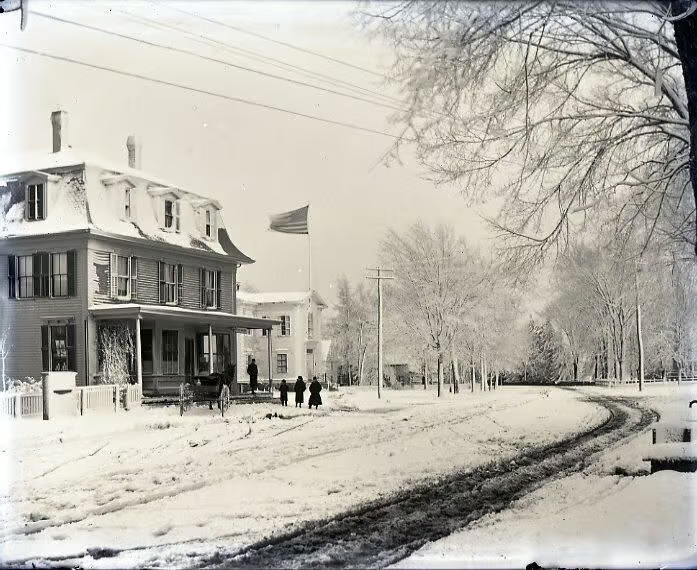
Trowt’s Store and Wenham Town Hall on election day. Nov. 6, 1894. From the Benjamin H. Conant Glass-Plate Negative Collection
What makes Conant’s photographs especially valuable is not only their subject matter, but the care with which they were created and documented. He worked with 8×10, 5×7, and 4×5 glass plate cameras and kept detailed notebooks recording the date, subject, and plate number for each image. Many of these notebooks survived, allowing us to identify scenes, track changes over time and better understand how individual photographs fit into the larger story of the town. Conant was not simply taking pictures; he was building a historical record.
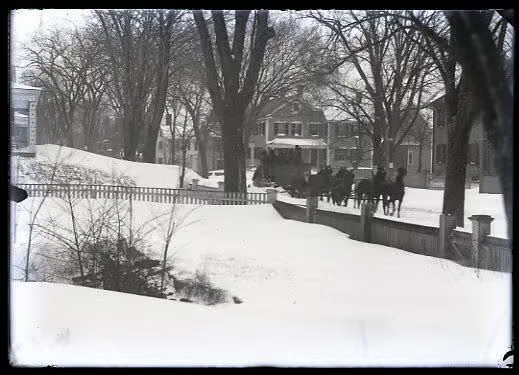
Winter landscape with sleigh ride, Main St. Wenham, looking east from B.H. Conant’s house. Feb 12, 1892. From the Benjamin H. Conant Glass-Plate Negative Collection.
Photography was only one facet of Conant’s life of service to the community. A Civil War veteran, he later worked as a shoemaker, local historian and Wenham’s first librarian, a position he held until his death in 1921. He also served for decades as an organist and clerk at the First Church of Wenham and was responsible for maintaining the town clock in the church tower. As a descendant of Roger Conant, founder of Salem, Mass., he may have felt a personal connection to history that influenced his commitment to preserving it.
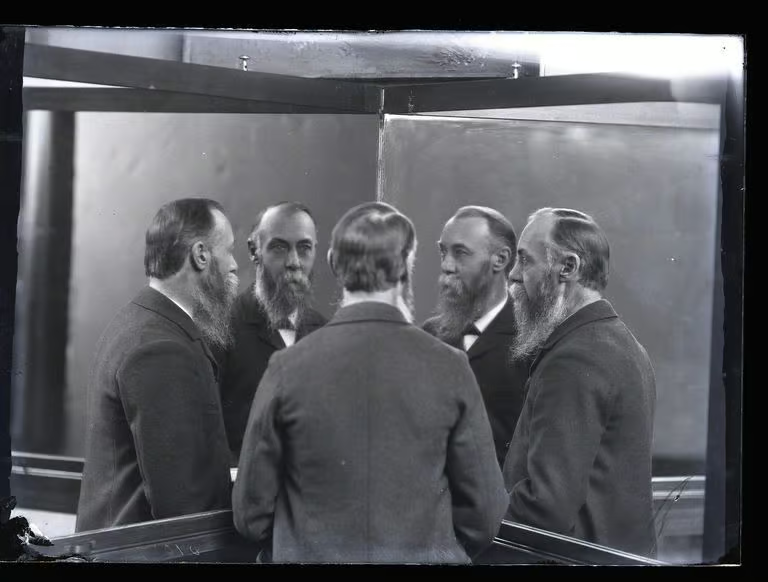
Seen in this context, Conant’s photography feels less like a hobby and more like an extension of his civic life. A man who cataloged books, kept time for the town and documented church and community life was already attuned to the importance of continuity. His photographs capture not only buildings, landscapes and townspeople, but the rhythms of daily life—how people worked, dressed and played.
The survival of this remarkable collection was not guaranteed. In 1969, the glass plate negatives were rediscovered during a routine cleaning of the attic in the museum’s historic Claflin-Gerrish-Richards house. Although they could have been easily discarded, they were instead recognized for their historical value and preserved. Today, they remain one of the most important visual resources for understanding Wenham’s past.
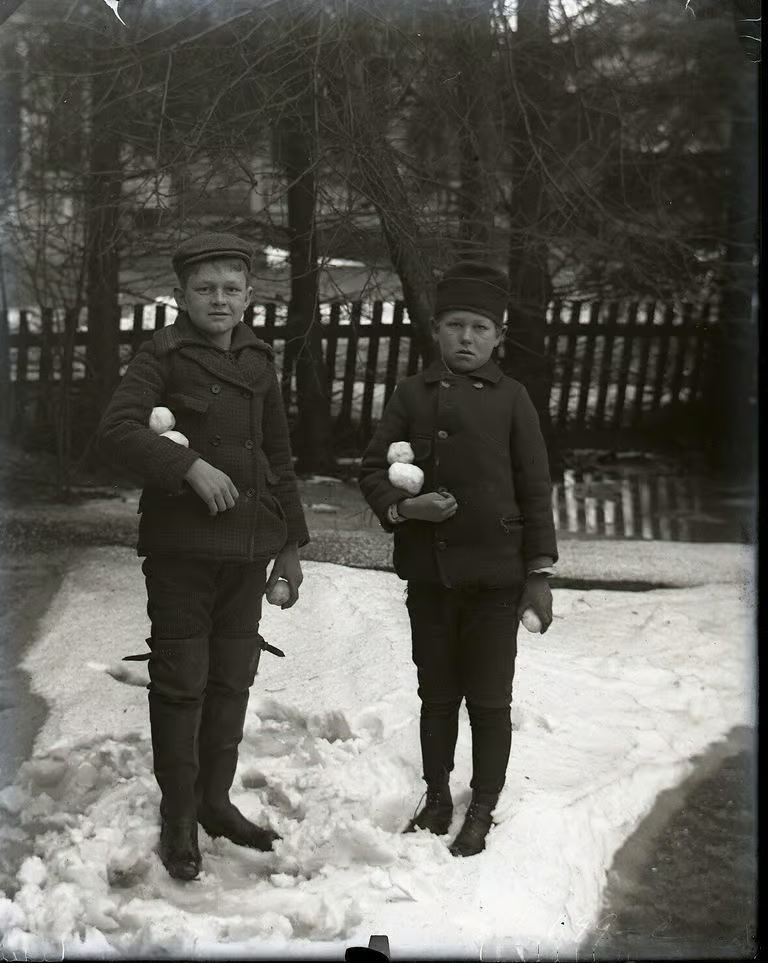
Eddie Sargent and Ralph Perkins standing outside with snowballs in their hands. Circa 1890. From the Benjamin H. Conant Glass-Plate Negative Collection.
More than a century after Conant’s photographs were taken, they continue to resonate with residents. Viewers recognize familiar places, notice what has changed and what has endured, and see echoes of their own lives in the past. These images remind us that history is shaped not only by major events, but by everyday moments—carefully observed, patiently recorded and preserved for future generations.
This article first appeared in H-W News.