

Apr-2026
Winter Work and Play: The History of Sledding
On a snowy day off from school, there are few outdoor activities more fun than sledding. For generations, people in New England have made good use of sleds both recreationally and professionally and the towns of Hamilton and Wenham are no exception.
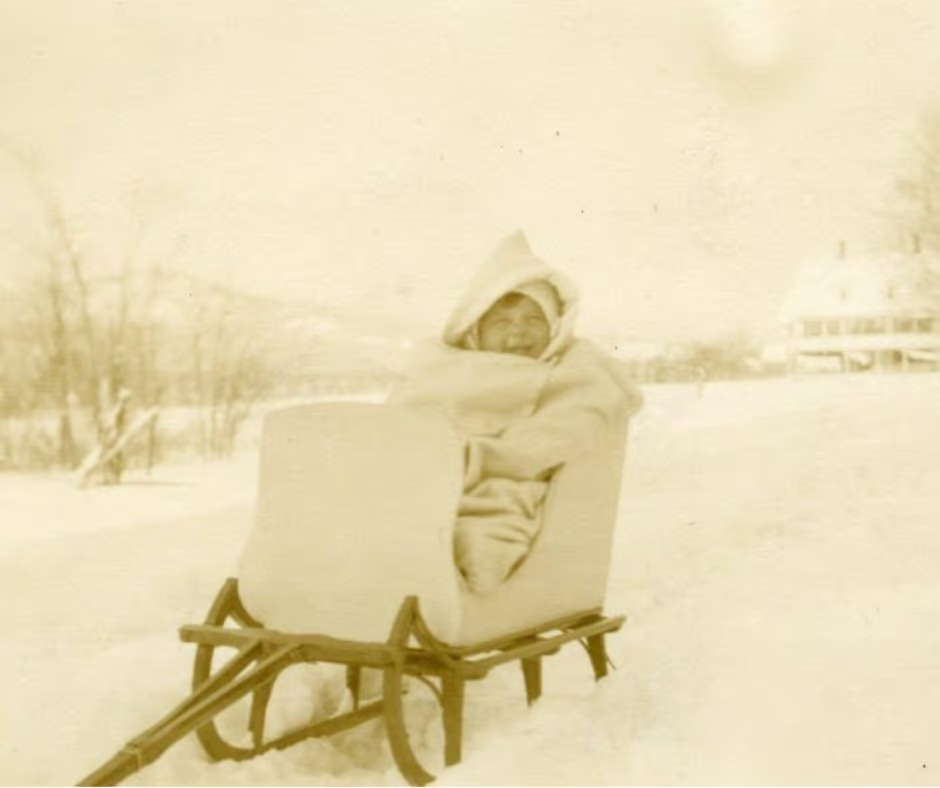
Photograph of Charlotte Louise Haarz (Marinelli) born Sept. 28, 1914.
Pictured in Campton N.H. c. 1916 wearing bunting.
While your modern-day sleds may be made of plastic or synthetic material, historically sleds were constructed with hardwoods like ash or oak. Every aspect of the sled, down to the finish and painting, was built to withstand freezing temperatures, harsh terrain, and years of use. The plastic sleds many of us own now are designed for recreational use. Sleds with curved metal runners and smaller frames, often called luges, are designed for speed and used in racing competitions. Larger arctic sleds are designed to carry goods and passengers through treacherous conditions.
The harsh New England climate rendered many modes of transit impractical next to the sled, which has been engineered over centuries to ensure survival in the winter. Take, for example, the toboggan, a long sled with a flat bottom designed to be pulled across the snow to transport goods and people. Its design differs from that of a wheeled cart, in that there are no moving parts that need traction the way a wheel does. The flat bottom allows the sled to glide overtop the snow easily without becoming stuck, allowing everyday travel to continue as normal. Work carried on through the winter as well, particularly in the lumber industry, which flourished during the cold months. Winter provided a break from the normal farming seasons, which allowed working men to leave their land and take to the woods where they would saw, strip, and load lumber onto sleighs.
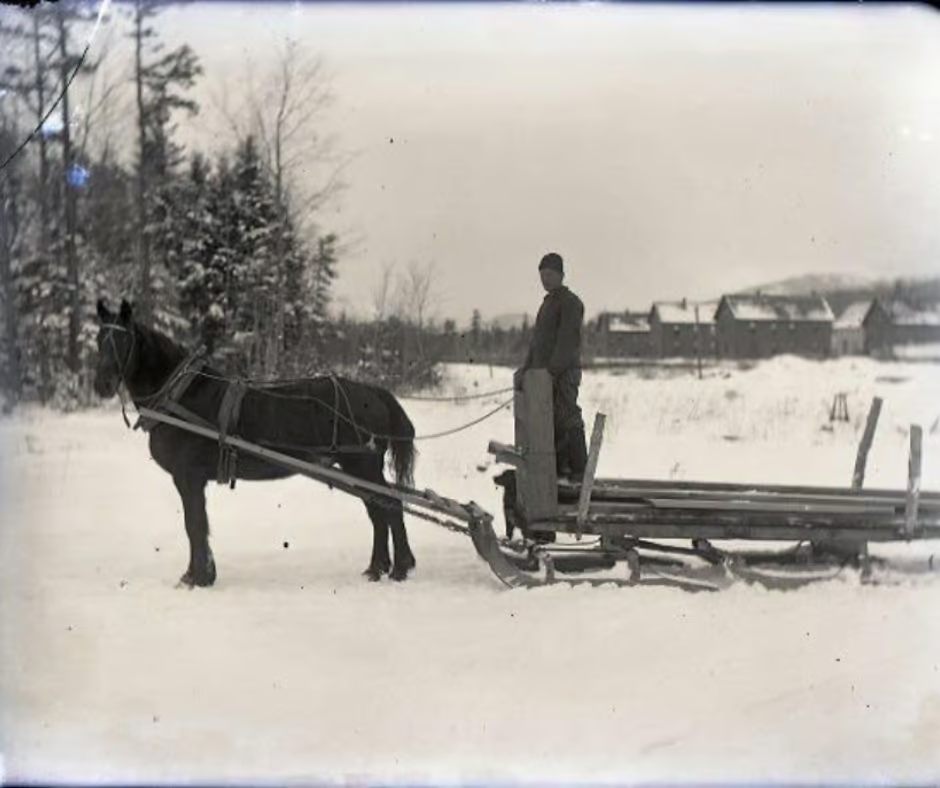
Horse hauling work pung (sled) on frozen lake or pond, ice houses in background, ca. 1880-1900.
The primary difference between a sled and a sleigh is its size and method of movement. While sleds are often low to the ground and sized to fit a person or light cargo, sleighs are larger carts built taller off the ground with two long runners, designed to be pulled by teams of horses or oxen. This engineering allowed lumber sleighs to take advantage of the even terrain and was another reason the lumber industry thrived in the wintertime.
Sleigh roads were cleared for several miles to allow horses to pull many loads of lumber throughout the workday, but as the snow was packed down, it became slick and icy. This condition limited where sleigh roads could be located, as horses could not always gain necessary traction on steep inclines; rather, they needed gravity working in their favor.
A solution to this problem came to light with the advent of steam haulers. The power from the steam would be enough to get carts over inclines, but the wheels were no better equipped to gain traction than hooves. The Lombard brothers of Waterville, Maine sought to remedy this issue by combining the innovation of the sleigh with the power of a steam engine. Thus, the Lombard Log Hauler was born.
This hauler used two sled runners at the front to carve a smooth path ahead and allow for smooth maneuvering through the roads. For traction, the “wheels” were two moving gears attached with wire rope, covered by a grapple track that would dig into the snow as the steamer pulled forward, allowing for a more efficient journey and less labor.
Innovations like this steam hauler marked the importance of sleds even with the advancement of the Industrial Revolution. Today, when sledders race down snow-covered hills in Hamilton and Wenham, they are participating in a long tradition shaped by industry, ingenuity, and adaptation to winter life in New England.
By Chloe E. Baker, Archivist
This article first appeared in H-W News.